Mathematics in Nature
I am Swadhin Roy Sunny, a highly motivated STEM enthusiast, mental health advocate, and young researcher. As an international award-winning student, I am dedicated to making a positive impact through science and technology. I founded Monobadh, a non-profit organization focused on mental health awareness, and I am also a content creator on YouTube, sharing my passion for learning and discovery. As a young entrepreneur, I am committed to fostering innovation and growth. I enjoy writing about travel, life philosophy, and physics, and I am always eager to connect with like-minded individuals and professionals.
Ever wondered why snowflakes are so symmetrical or how bees manage to build such perfect hexagons? These aren’t just random works of art crafted by nature’s hand—they’re expressions of a deep and beautiful language: mathematics. Though math might seem like an abstract concept confined to the pages of textbooks, it’s actually the blueprint that underlies the very fabric of our universe. From the way galaxies form to the structure of a honeycomb, math is the silent force that shapes the world around us.
The Fibonacci Sequence:
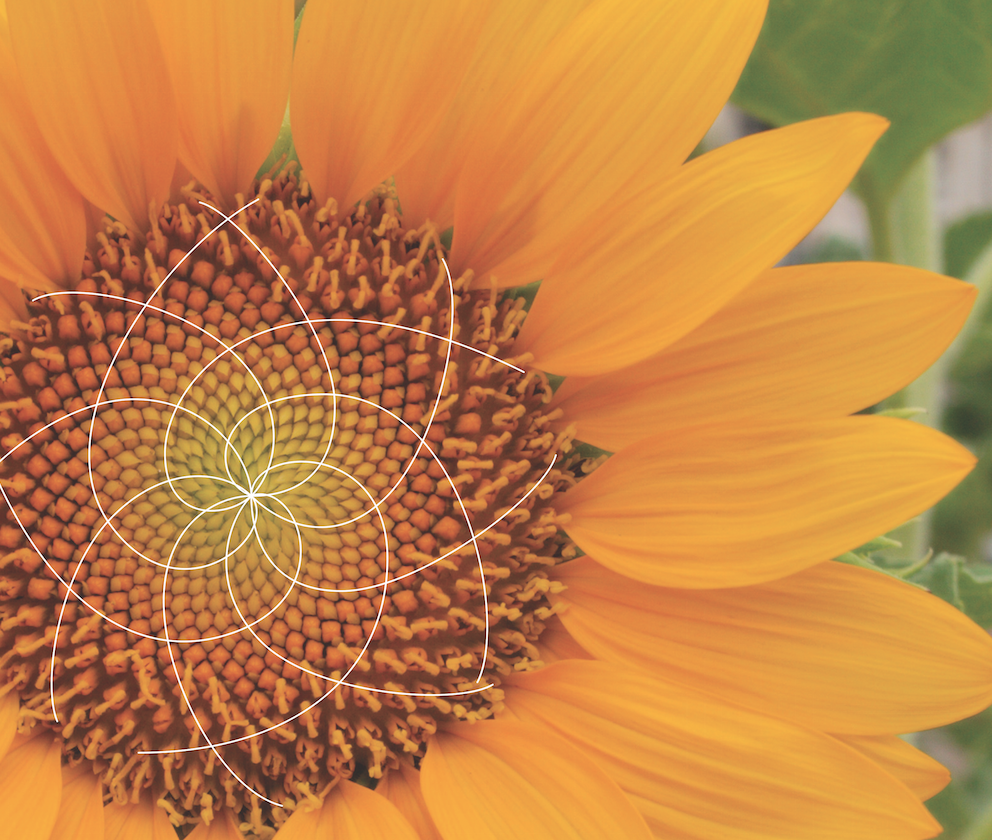
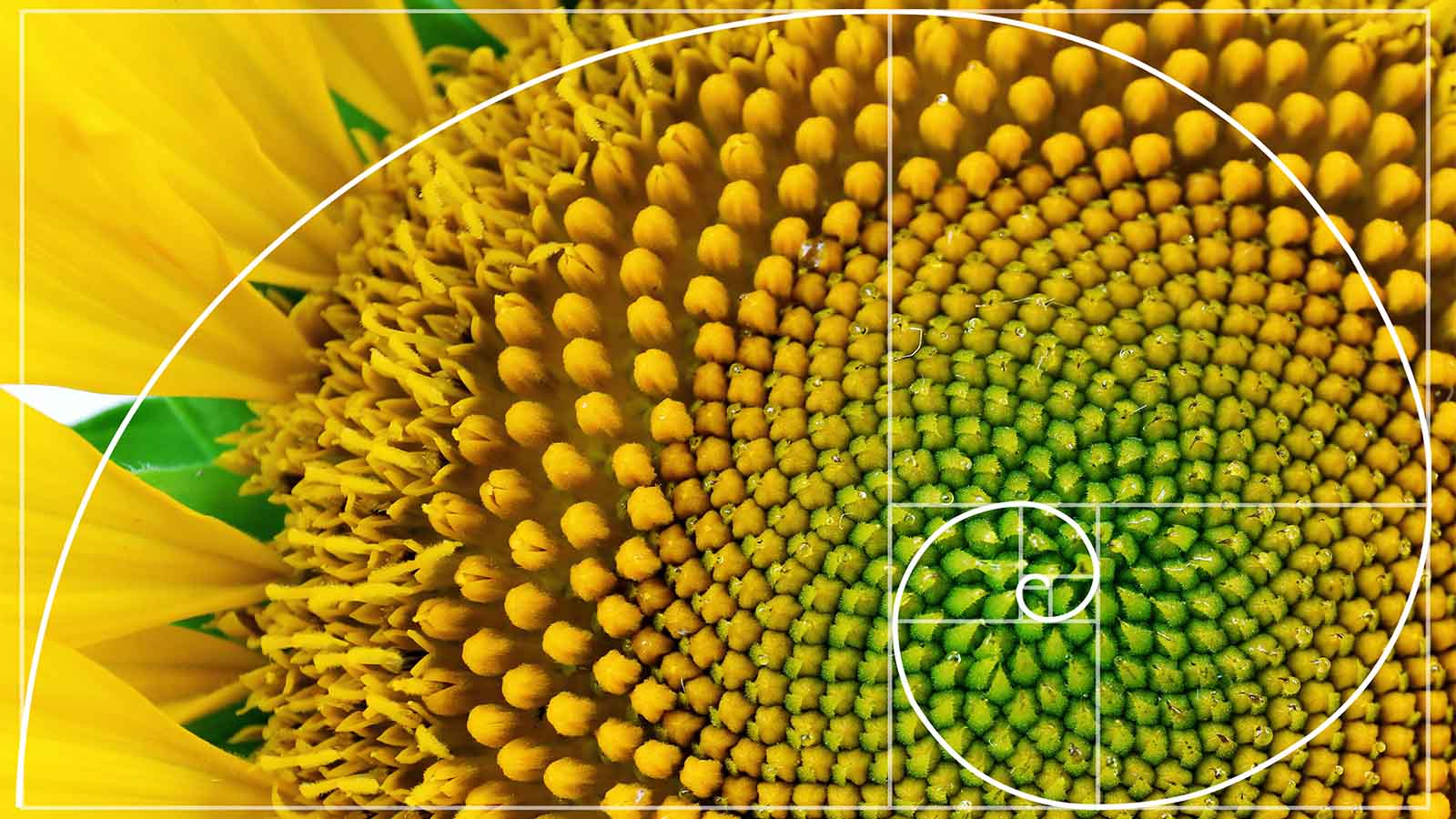
Nature’s Golden Ratio One of the most enchanting ways math manifests in nature is through the Fibonacci sequence—a series of numbers where each number is the sum of the two preceding ones (1, 1, 2, 3, 5, 8, 13…). This sequence appears in everything from the arrangement of leaves on a stem to the scales of a pine cone. But it’s not just the sequence that’s magical; it’s the ratio between consecutive Fibonacci numbers, known as the Golden Ratio (approximately 1.618). The Golden Ratio is a proportion that seems to bring a sense of balance and harmony, and it’s found in places you wouldn’t expect. Look closely at a sunflower: its seeds are packed in spirals that radiate outwards, and the number of spirals in one direction and the other are consecutive Fibonacci numbers. This arrangement allows the sunflower to pack as many seeds as possible into a given area—nature’s way of optimizing space using math!
Fractals: Infinite Complexity from Simple Rules
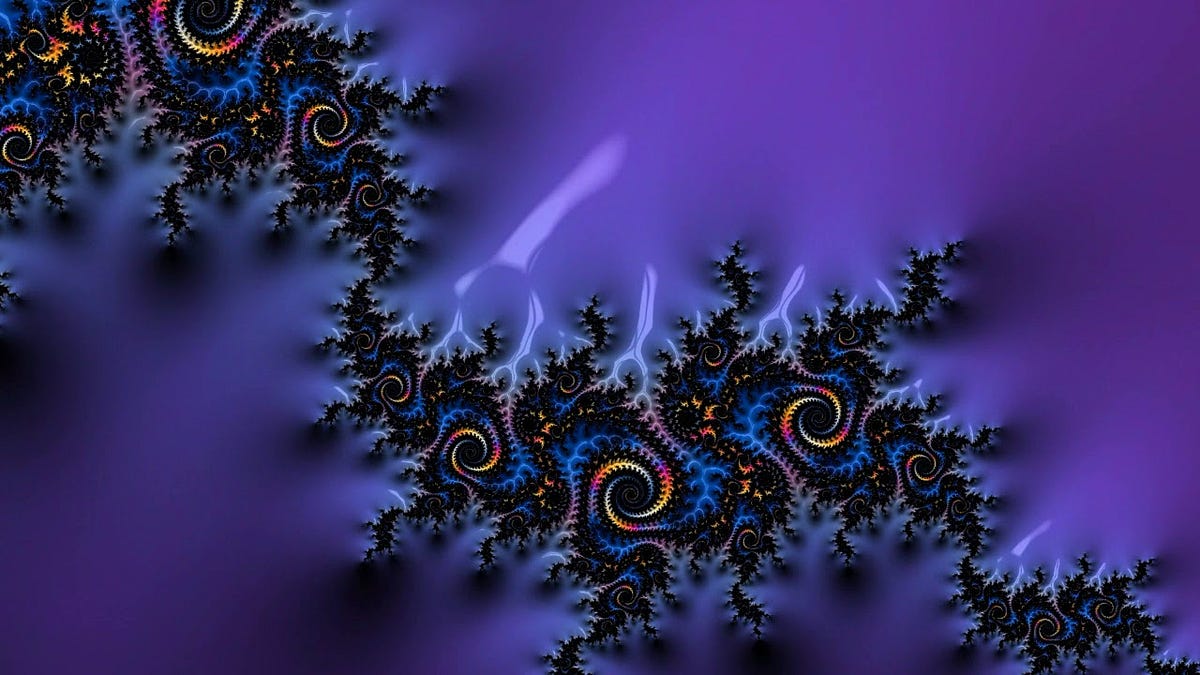
Ever noticed how the branches of a tree resemble the structure of the whole tree? Or how a cauliflower looks like a miniature version of itself when you break off a piece? These self-similar patterns are known as fractals. Fractals are shapes that can be split into parts, each of which is a reduced-scale copy of the whole. Fractals are created through simple, repetitive processes that produce infinite complexity. Take the coastline of an island: the more you zoom in, the more detail you uncover, yet it still looks somewhat similar at every scale. This concept is not just a visual curiosity but also an essential part of understanding natural phenomena like the formation of mountain ranges, the growth of plants, and even weather patterns.
Symmetry: The Art of Balance
Symmetry is another mathematical concept that nature loves to use. Think about a butterfly’s wings, the reflection of a mountain in a calm lake, or the balanced halves of a human face. Symmetry brings a sense of order and beauty, which is why we often find symmetrical objects pleasing to the eye. Mathematically, symmetry can be described as an object’s invariance under certain transformations—like flipping, rotating, or scaling. This principle not only applies to living organisms but also to crystals, snowflakes, and even galaxies. In fact, symmetry is so fundamental to nature that it’s often used by scientists to predict the existence of new particles and forces in physics!
The Spiral of Life: The DNA Double Helix
At the molecular level, math takes on a form that is essential for life itself. The DNA molecule, the blueprint of all living organisms, is a double helix—a spiral that twists around itself in a structure governed by mathematical principles. The spirals in DNA are logarithmic, meaning they follow a specific mathematical formula that allows the molecule to store vast amounts of genetic information in a compact form. This isn’t just a fluke of nature; the spiral shape is efficient for packing and protects the integrity of the genetic code during processes like replication. The very instructions that guide the development and functioning of all living things are written in a language deeply rooted in mathematics.

The Mathematics of Survival: Predator-Prey Dynamics
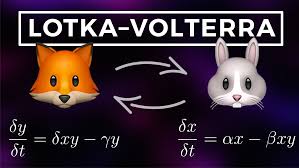
Mathematics isn’t just about patterns and shapes—it also plays a crucial role in the survival strategies of species. Take, for example, the interaction between predators and prey. The relationship between their populations can be modeled using differential equations, a type of mathematical formula that describes how things change over time. The famous Lotka-Volterra equations, for instance, show how the population of predators and prey influence each other in cycles. When prey is abundant, predator numbers increase. But as predators become more numerous, they reduce the prey population, leading to a decline in predators as well. This dynamic balance is a dance dictated by mathematics, ensuring that neither predator nor prey wipe each other out completely.
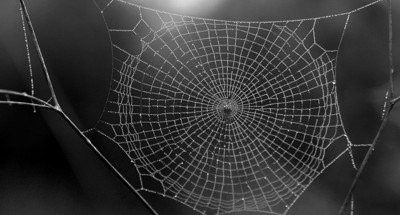
Spider’s Web Geometry:
The intricate web of a spider is a masterpiece of engineering. The angles and distances between threads are carefully calculated to maximize prey capture while minimizing energy expenditure. It’s a perfect example of nature’s efficiency.
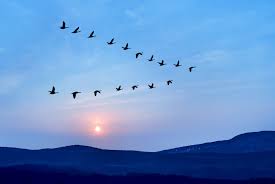
Bird Flight Formation:
When geese fly in a V-formation, they’re not just being social—they’re using math to reduce air resistance and conserve energy. This aerodynamic strategy allows them to travel long distances with minimal effort, demonstrating how math helps optimize survival.
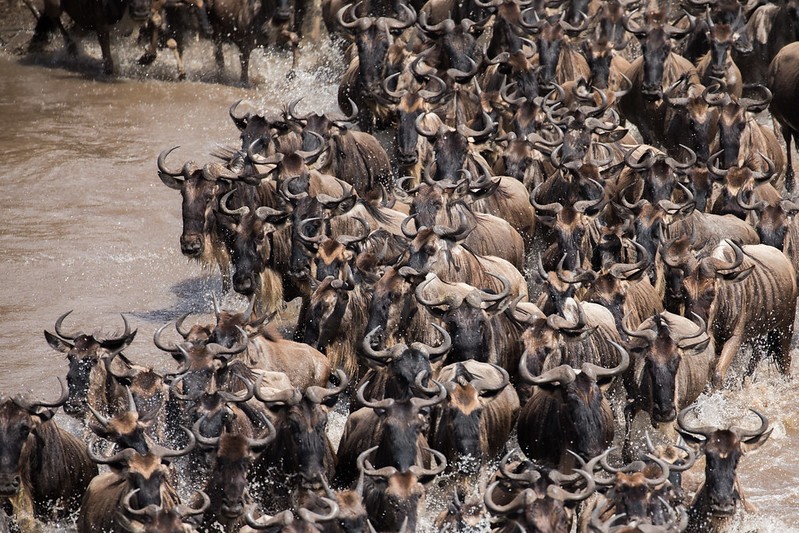
Animal Navigation:
Many creatures navigate using the sun, stars, and even the Earth’s magnetic field. These natural navigators perform complex calculations based on time, position, and movement, showcasing an innate understanding of mathematical principles.
Math isn’t just a subject we learn in school; it’s the language of the universe. It’s the code that underlies the beauty of a flower, the efficiency of a honeycomb, the structure of our DNA, and even the balance of ecosystems. By understanding the math in nature, we’re not just solving equations—we’re uncovering the secrets of the world around us.
So next time you’re outside, take a closer look at the patterns, shapes, and structures in nature. You’ll see that mathematics is all around us, hidden in plain sight, orchestrating the symphony of life.